1. Which projects did you review?
I reviewed Devon Mussachio’s Wild Women Exhibition: The Beauty
and Power of Mother Nature. It was a compilation of pieces that depicted the female body and its connection with nature and the earth.
2. Why did you select the Exhibit you critiqued?
I selected this exhibit because being a Women/Gender studies student, it really spoke to me in that it was about the beauty of being a woman as well as its connection with nature, another beautiful thing in this world.
3. What challenges did you face in writing the critique article and how did you overcome them?
It was hard to look at the exhibit in an objective manor especially when art is such a subjective part of life. I just tried to remind myself of the elements and principles of art and what would be appealing to the masses. At the end I couldn't help but put my own two cents in on the exhibit but I think it added a personable touch.
4. How do you feel about critiquing your peers work?
I think it's great being able to view my classmates work and see what type of art they are interested in. I like getting different perspectives on things and being able to see others creations and thoughts on the material is really rewarding.
5. Would you like to read the critique your peers wrote about your Art Curation Project?
I would love to see what people wrote about my exhibit. I have always been accepting to criticism being an athlete but I would like to see how it differs when people have something to say about my creativity and artistic skills!
6. On a scale of 1-10 how would you rate your finished article and why?
I would rate my article at a 7 I think because it may have been too subjective and comprising of my personal opinion rather than focusing at the techniques, element and principles. But at the same time I thought I was able to grasp the exhibit and represent it well to an audience.
7. Did you enjoy working on this project?
I did like working on this project because it allowed me to view my classmates work as well and give my opinion on it.
Wednesday, August 8, 2012

Art Gallery Visit #3
These self portraits are exhibited in the ROCHESTER MEMORIAL ART GALLERY.
 |
| E.E. Cummings |
 |
| Jerome Myers |
 |
| Alex Katz |


1. Why did you select the inspiration pieces?
I chose these three pieces because I thought each one brought a different light to how self portraits can be done. E.E. Cummings is very detailed and clean, Jerome Myers is more free-handed and sketchy, and Alex Katz is more cartoon or character like.
2. Why did you select the media to create your self-portrait?
I chose just using pencil because its simple and I really like the sketch and messy lined look of drawings. I think it adds character and its not as clean cut.
3. What challenges did you face in creating your self-portrait and how did you overcome them?
I'm not a very good artist as it is but other than that I had a hard time with proportions. My head is very squished and non proportional in my portrait. So I just kind of went with it and turned it more into a messy, abstract look like Myers did in the portrait above.
4. How does this piece represent you?
I think it represents me in that it is me reflecting on myself. There are obviously some distortions and kinks that need to be worked out, just like anyone has things they need to work on with themselves, but the first step to doing that is knowing and reflecting on them.
5. What elements and principles of art did you apply in this work?
I tried to add in some shading by smudging the pencil along the areas where there was a shadow. I don't know how successful it was but I remember seeing my sister use that technique in some of her pieces.
6. Did you enjoy working on this project?
I thoroughly enjoyed working on this project. I love the hands on aspect of it and although it was hard and the ending result wasn't how I envisioned it, it's always good to get your ideas and thoughts down on paper and express some creativity once in awhile.
7. What do you think of your final artwork?
I didn't have very high expectations of it and I think the best part of it is my hair, but other than that I don't think it is very accurate. But at the same time it's my work and I know I put in the effort and really liked doing it, so therefore I think it was successful.
Sunday, August 5, 2012
Project 4-POP ART exhibit
I decided to choose the theme of Pop Art because: 1) I find the bold colors and subject matter interesting, simple and intriguing and 2) I have been hooked on watching the show Mad Men on television and that is the style of art that is portrayed throughout the show.
I remember my sister telling me a little about Pop Art when we were visiting the Albright Knox and it immediately caught my attention. I loved finding all the pieces throughout my project and exploring the different kind of "pop prints" and art that was around during that early 1960 time period. I used ArtLex to look up several artists and used about two of their pieces in my exhibit.
Jim Dine's Tool Box 6 and James Rosenquist's Marilyn are my favorited pieces I used in my powerpoint. I loved Dine's collage because it had such a nostalgic feeling that made me want to hear stories from my parents childhood. Rosenquist's print of Marilyn Monroe was another one of my favorites because I think it had a strong underlying meaning. Having a background in women/gender studies, I interpreted the print of being very objectifying of women because of its use of only her body parts and just a few letters from her name.
I remember my sister telling me a little about Pop Art when we were visiting the Albright Knox and it immediately caught my attention. I loved finding all the pieces throughout my project and exploring the different kind of "pop prints" and art that was around during that early 1960 time period. I used ArtLex to look up several artists and used about two of their pieces in my exhibit.
Jim Dine's Tool Box 6 and James Rosenquist's Marilyn are my favorited pieces I used in my powerpoint. I loved Dine's collage because it had such a nostalgic feeling that made me want to hear stories from my parents childhood. Rosenquist's print of Marilyn Monroe was another one of my favorites because I think it had a strong underlying meaning. Having a background in women/gender studies, I interpreted the print of being very objectifying of women because of its use of only her body parts and just a few letters from her name.
 |
| James Rosenquist, Marilyn |
 |
| Jim Dine, Tool Box 6 |
Thursday, July 26, 2012
Module 10 Video Post
1. Explain why you selected each of the TWO videos you choose from the selection listed above.
-Buddhism: I selected this video because the religion of Buddhism has always interested me and I wanted to see the artistic aspect of it.
-The Great Wave: I selected this video because I have seen this painting all over but never knew anything about it or even that it was a famous painting. Plus I love the ocean!
2. For each video list/discuss the key concepts you learned.
-There is rich architecture where the Buddhist religion is practiced such as the Shakarama, the Torana, and the Mahabodi Temple which are mentioned in the beginning of this video. Also in Sanchi, India, which is a large worshiping place for Buddhist's, art is portrayed in thier stupas which are worshiping places and examples of narrative art.
-It is an image on the verge of chaos that has been used for political cartoons, tattoos, and novelty items. It was created after unfortunate and chaotic events that happened in the artists life that influenced such a successful print. It is considered one of the greatest portrayals of the sea.
3. How do the videos relate to the readings in the text?
-The stupas are mentioned in our book and how they are covered in carvings of animals and depictions of the culture that surrounded the Buddhist religion. Our reading also describes the indirect portrayals of Buddha himself by showing footprints to indicate his presence rather than a blunt picture or carving of himself.
-Hokusai's work is mentioned in our reading of how his "throw away souveniers" became lasting and remembered works of art with time. He was an craftsmen of the Edo period who was not recognized as an artist until just recently.
4. What is your opinion of the films? How do they add depth to understanding of the readings and art concepts?
-I loved learning more about the Buddhist religion and it is depicted in art. I like how it influences people to dig a little deeper to find meaning in the carvings and architecture to relate to their religion. I thought it added more visuals to what we read in our book and I was able to gain a better perspective of it all.
-I liked how the people interviewed in this video perceived The Great Wave. My favorite perspective was how it is a depiction of what is such a peaceful aspect of nature on the verge of chaos and destruction. I think it enhanced my knowledge of the reading and Japanese art because I have such a passion for the ocean so I was able to really relate and was fascinated with this specific piece of art.
-Buddhism: I selected this video because the religion of Buddhism has always interested me and I wanted to see the artistic aspect of it.
-The Great Wave: I selected this video because I have seen this painting all over but never knew anything about it or even that it was a famous painting. Plus I love the ocean!
2. For each video list/discuss the key concepts you learned.
-There is rich architecture where the Buddhist religion is practiced such as the Shakarama, the Torana, and the Mahabodi Temple which are mentioned in the beginning of this video. Also in Sanchi, India, which is a large worshiping place for Buddhist's, art is portrayed in thier stupas which are worshiping places and examples of narrative art.
-It is an image on the verge of chaos that has been used for political cartoons, tattoos, and novelty items. It was created after unfortunate and chaotic events that happened in the artists life that influenced such a successful print. It is considered one of the greatest portrayals of the sea.
3. How do the videos relate to the readings in the text?
-The stupas are mentioned in our book and how they are covered in carvings of animals and depictions of the culture that surrounded the Buddhist religion. Our reading also describes the indirect portrayals of Buddha himself by showing footprints to indicate his presence rather than a blunt picture or carving of himself.
-Hokusai's work is mentioned in our reading of how his "throw away souveniers" became lasting and remembered works of art with time. He was an craftsmen of the Edo period who was not recognized as an artist until just recently.
4. What is your opinion of the films? How do they add depth to understanding of the readings and art concepts?
-I loved learning more about the Buddhist religion and it is depicted in art. I like how it influences people to dig a little deeper to find meaning in the carvings and architecture to relate to their religion. I thought it added more visuals to what we read in our book and I was able to gain a better perspective of it all.
-I liked how the people interviewed in this video perceived The Great Wave. My favorite perspective was how it is a depiction of what is such a peaceful aspect of nature on the verge of chaos and destruction. I think it enhanced my knowledge of the reading and Japanese art because I have such a passion for the ocean so I was able to really relate and was fascinated with this specific piece of art.
Module 9 Video Post
1. Explain why you selected each of the TWO videos you choose from the selection listed above.
-The Night Watch (Rembrandt): I selected this video because I remember my sister saying she liked Rembrant so I was curious to see what his style was.
-Botticelli's La Primavera: I selected this video because of the controversial and unknown meaning of the painting.
2. For each video list/discuss the key concepts you learned.
-The painting is full of question and emotion. It is a ritual for the people of Amsterdam to see the painting at least once in their life. It was such an innovative piece for that time period and is rich with history beneath the paint.
-It is a mysterious painting that holds so many questions. There are several random people brought together in an unexplainable way. People aren't sure whether the painting is a portrayal of sexual permissiveness, seasons, or botany and the title "La Primavera" which is Italian for "spring" does not give much information to find Botticelli's meaning.
3. How do the videos relate to the readings in the text?
-It was a product of the Baroque era which was a movement during the 17th Century that focused more on displaying emotion and energy. This was successful in The Night Watch because each man of the militia has a different and unique facial expression and body language.
-This is a painting of the Renaissance in Italy. Greek and Roman gods and goddesses were popular subject matter during this time period and is portrayed in La Primavera. Botticelli's style also influenced the philosophy known as Neo-Plaonism, which was mentioned in our book as well.
4. What is your opinion of the films? How do they add depth to understanding of the readings and art concepts?
-The Night Watch video was informative and interesting. I liked how they interviewed observers perspectives of the painting in the gallery and also how we got to see the reenactment of the painting by live people. It also reenforced the concept of "rebirth" during the Renaissance and how such new concepts and techniques were introduced in art.
-The La Primavera video definitely made me look at the painting and really try to find some connection or meaning of it. Now learning more about it, I find it fascinating how one painting can cause viewers so much chaos, confusion and inspiration to dig to find the answer. I also thought this was a good example of Renaissance art because again it was a foreign look to people during that time.
-The Night Watch (Rembrandt): I selected this video because I remember my sister saying she liked Rembrant so I was curious to see what his style was.
-Botticelli's La Primavera: I selected this video because of the controversial and unknown meaning of the painting.
2. For each video list/discuss the key concepts you learned.
-The painting is full of question and emotion. It is a ritual for the people of Amsterdam to see the painting at least once in their life. It was such an innovative piece for that time period and is rich with history beneath the paint.
-It is a mysterious painting that holds so many questions. There are several random people brought together in an unexplainable way. People aren't sure whether the painting is a portrayal of sexual permissiveness, seasons, or botany and the title "La Primavera" which is Italian for "spring" does not give much information to find Botticelli's meaning.
3. How do the videos relate to the readings in the text?
-It was a product of the Baroque era which was a movement during the 17th Century that focused more on displaying emotion and energy. This was successful in The Night Watch because each man of the militia has a different and unique facial expression and body language.
-This is a painting of the Renaissance in Italy. Greek and Roman gods and goddesses were popular subject matter during this time period and is portrayed in La Primavera. Botticelli's style also influenced the philosophy known as Neo-Plaonism, which was mentioned in our book as well.
4. What is your opinion of the films? How do they add depth to understanding of the readings and art concepts?
-The Night Watch video was informative and interesting. I liked how they interviewed observers perspectives of the painting in the gallery and also how we got to see the reenactment of the painting by live people. It also reenforced the concept of "rebirth" during the Renaissance and how such new concepts and techniques were introduced in art.
-The La Primavera video definitely made me look at the painting and really try to find some connection or meaning of it. Now learning more about it, I find it fascinating how one painting can cause viewers so much chaos, confusion and inspiration to dig to find the answer. I also thought this was a good example of Renaissance art because again it was a foreign look to people during that time.
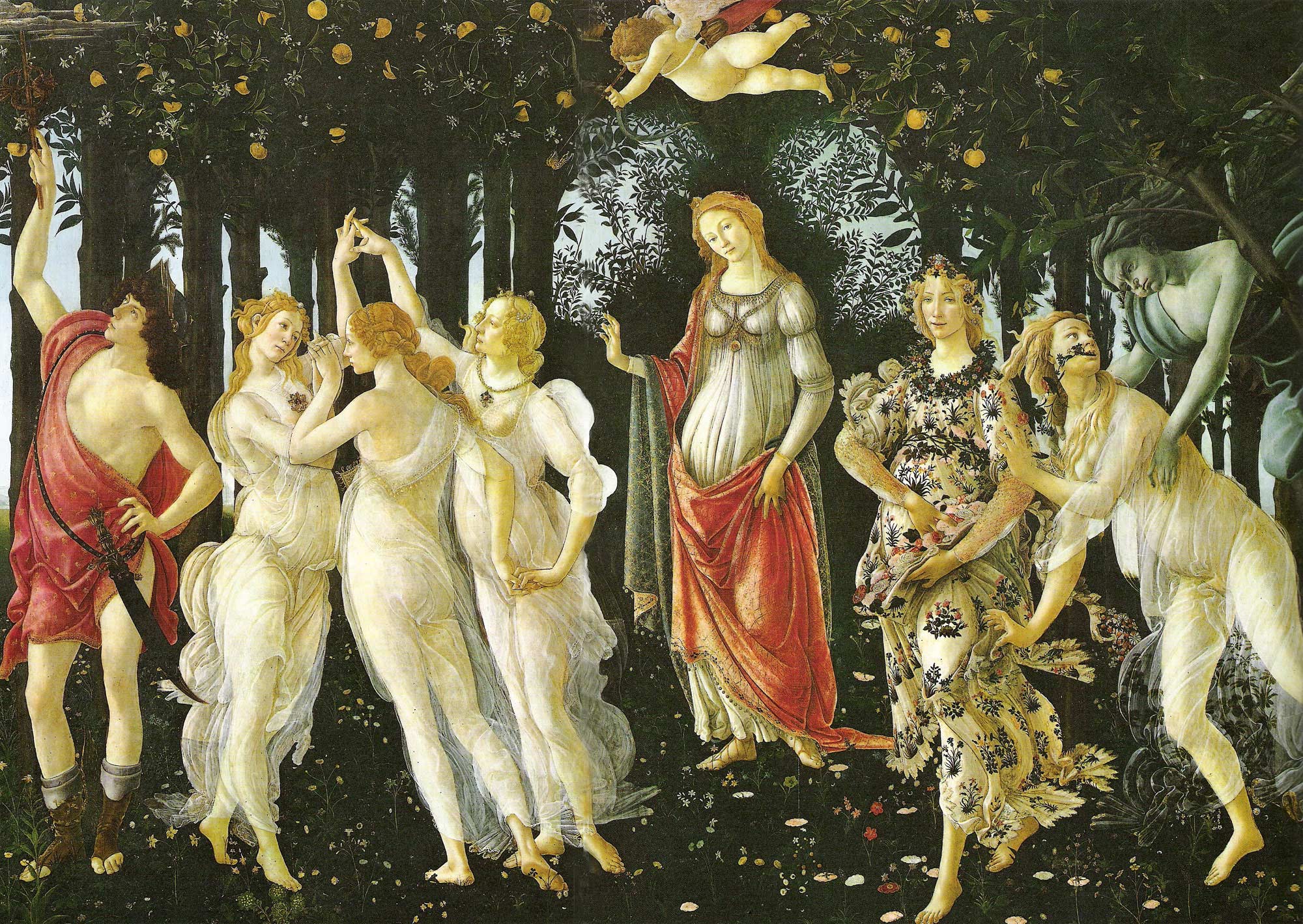 |
| La Primavera by Botticelli |
 |
| The Night Watch by Rembrandt |
Monday, July 16, 2012
Exploring Line
 | |
| (left) dominant hand drawing/(right) non-dominant drawing |
1. What was it like using your hand as subject matter for a drawing?
I thought it was cool to use my hand as the subject because I actually had to look and observe the lines and edges of something that I see and use everyday but never take the time to look at it. I enjoyed reacquainting myself to both hands during the process!
2. What media did you select - pencil or charcoal? Why?
I used charcoal because I have yet to use it and also because my pencils were dull and I didn't have access to a pencil sharpener. Yet I find myself to enjoy charcoal better because I like how it appears a little darker and edgier than just pencil.
3. How did it feel to create a drawing with your non-dominant hand?
It was uncomfortable at first but once I got going I kind of had fun with it. I knew it wasn't going to perfect or even aesthetically pleasing, but it was still an interesting exercise.
4. Compare and contrast your final drawings. Do you think they are successful studies?
I don't really know if it was successful just because I don't have much of an artistic eye for shading and line but I really enjoyed attempting it and just kind of scribbling away at my own leisure. I think I like my non-dominant drawing better too because I wasn't trying to be perfect with my lines and felt a lot looser with the sketch.
5. Would you consider using your non-dominant hand to create artwork in the future?
Yes I would definitely use my left hand again when making artwork, simply because it is fun and rids me of the pressure I put on myself when using my dominant hand.
Friday, June 29, 2012
Installation Sculpture

1. What is installation art?
Installation art is when an artist specifically places objects together in a particular space that strengthens the artist's message.
2. What materials are used installation art?
Any objects can be used in installation art. For example, in our book, one piece involved everyday objects such as buckets, spoons, aluminum foil and string. It is how they are presented in their area that completes the piece.

For my installation piece I used old books from our local flea market and wooden frames that I lightly coated with white paint. I placed them in the brick fireplace at my sister's apartment. When I was looking at the fireplace I pictured a window or kind of pathway into the unknown. That's why I went with the empty frames and books. When looking through them you can feel like there's an endless path or journey.

I took more of the "Self Theme" because as young students we are still growing and learning about ourselves and trying to start on the right paths of our lives. I thought that the books and frames somewhat represented that in the fact that they are types of windows leading into further things.

Wednesday, June 27, 2012
Sculpture Videos
1. For each video list/discuss the key concepts you learned.
Through the Eye's of the Sculptor: Sculptor's put life into the stone they are working on with every hit of their mallet. They have to carefully plan every move they make because once you carve whatever your carving into the stone, it is hard to revert it. There is also a lot of brainstorming that goes into placement, material, etc depending on where the sculpture is being placed and what factors it much endure through.
Glass and Ceramics: The process of making a stained glass window is just like putting together a giant puzzle. You have to cut out pieces of glass, paint them with a certain material and fasten them back together to create the finished product. Also blowing glass is a fascinating process that requires a great amount of multitasking. You have to blow into the hollow rod, while rolling the rod back and forth and shaping the actual glass all at the same time.
Installation Art: Installation art can be the most random and daily used objects that are specifically placed and combined together in a particular space to display a certain message. It is more of an environment rather than a piece of art because it involves 3 dimensional space that interacts with its environment.
2. How do the videos relate to the readings in the text?
All three videos relate to the text in that they discuss how sculptures, installations and crafts are made and used in the real world. For example the videos brought to life the functional uses of these types of artworks such as blowing glass to make wine glasses or using sculpting to restore historic buildings. They also touched on medias that the text mentioned too.
3. What is your opinion of the films? How do they add depth to understanding of the topics: Sculpture, Installation, and Craft?
I personally found the Glass and Ceramics film the most interesting and entertaining because it involves so much careful handling and specific movements to create a sculpted piece of glass. They other videos also helped support what was in the text and gave me a visual to put the pieces of the text together and further understand the art of sculpting, installations and crafts!
Saturday, June 23, 2012
Logo
1. Discuss what you thought about when creating your logo.
When creating my logos all I was drawing was what came to my mind first. I just thought about my past experiences, likes and hobbies and tried to put it on paper. Although my drawing abilities don't really display what I imagined in my mind, I tired to do my best to portray what I felt was me in one image.
2. Describe the process: creative thinking skills and ideas you used in the logo creation.
I used the "buzz word technique" as well as "braingstorming" when I was creating the logos. I tired thinking of things that I admire or like about myself and put it down onto the paper in a small, simple image that would sum up "Linda".
3. What was the most important discovery you made in the creation of your logo?
The most important discovery I made during this process was that you don't need an extravagent piece of artwork or the most clever idea to represent yourself or your thoughts. Simple things can display the deepest of thoughts or ideas.
4. What is the most important information you learned from watching the videos, powerpoint, and reading material for this project? What is your opinion of the videos?
The videos and powerpoint were very helpful when trying to figure out a place to start when creating the logo. I wasn't exactly sure how to begin this process but the creative thinking skills in the powerpoint and the information given through the videos broke down the process for me allowing me organize my ideas. I also enjoyed the videos because they showed us how big businesses use these techniques to create their logos and all of the details that are put into a logo that portray certain messages and have specific meanings.
When creating my logos all I was drawing was what came to my mind first. I just thought about my past experiences, likes and hobbies and tried to put it on paper. Although my drawing abilities don't really display what I imagined in my mind, I tired to do my best to portray what I felt was me in one image.
2. Describe the process: creative thinking skills and ideas you used in the logo creation.
I used the "buzz word technique" as well as "braingstorming" when I was creating the logos. I tired thinking of things that I admire or like about myself and put it down onto the paper in a small, simple image that would sum up "Linda".
3. What was the most important discovery you made in the creation of your logo?
The most important discovery I made during this process was that you don't need an extravagent piece of artwork or the most clever idea to represent yourself or your thoughts. Simple things can display the deepest of thoughts or ideas.
4. What is the most important information you learned from watching the videos, powerpoint, and reading material for this project? What is your opinion of the videos?
The videos and powerpoint were very helpful when trying to figure out a place to start when creating the logo. I wasn't exactly sure how to begin this process but the creative thinking skills in the powerpoint and the information given through the videos broke down the process for me allowing me organize my ideas. I also enjoyed the videos because they showed us how big businesses use these techniques to create their logos and all of the details that are put into a logo that portray certain messages and have specific meanings.
 |
| Final Logo: old movie camera projecting my initials |
 |
| Top Draft Logo: palm tree with initials on side Bottom Draft Logo: my eyes with my initials |
 |
| Draft Logo: a peace sign made from my first and last name |
Art Gallery Visit #1

Title: Oasis
Media: Triptych, Acrylic, Charcoal on canvas
I wanted to know more about what the artist was feeling/thinking about when she created this piece. It stuck out to me because of its chaos in colors and shapes but the title holds such a peaceful meaning.

Title: Naucet Moon
Media: Egg Tempera on Panel
I felt a connection with this piece because it reminds me of my family's beach house in Long Island. There is a long wooden boardwork to the beach just like this painting and it brings back all of the memories I had walking down my boardwalk.

Title: Park Sunset
Media: Oil on board
This is another piece that I felt connected to because it reminds me so much of my hometown and how the sunset looks against the fields and trees. It brings me back to summer nights at bonfires and laying out with friends back in high school.

Title: Storm
Media: Digital Pinhole Photography
This photograph made an impression on me first off because I love the art of photography and secondly the concept of a pinhole camera is very fascinating. The blurry effect it captured gives the photo a sort of imperfection which impacted me personally because sadly my biggest fear are thunderstorms.

Artist: Ron Ketchum
Title: Untitled
Media: Oil
This is another painting that I would like to know more about because again of its chaos. I want to know what the artist was feeling and why he chose the colors and strokes he used.

Artist: Paul Taylor
Title: Canandaigua Alleyway
Media: Watercolor
This painting made an impression on me because I have always loved being near the water. It is such a peaceful scene that has always comforted me as well as bring back memories with my family and friends.
Saturday, June 16, 2012
Value Scale & Color Wheel
 |
| Color Wheel |
 |
| Value Scale |
1. Discuss what you thought about creating the Value Scale and Color Wheel.
Creating the value scale was difficult for me because I like things to be perfect and only being able to shade by eye rather than comparing it to something made this a timely project. On the other hand, creating the color wheel brought me back to the good old days when we did that type of stuff in elementary school. I had fun working with paints again and mixing them to make new colors. It made me finally appreciate grade school.
2. Which media did you enjoy working with the best and why?
I liked working with the paints because you can mix them to create new shades and colors. I find it fascinating how all colors derive from just three basic colors. It was enjoyable as well as a learning/experimental project and I look forward to using more acrylic paints in the future!
3. What was the most important discovery in the creation of these studies?
Other than needing patient, I discovered that the technical aspects of art, such as the value scale and color wheel, are very important to master because they are the foundations for creating the bigger and more complex pieces of art that we are learning about now.
4. What is the most important information you learned from watching the videos for this project? What is your opinion of the videos?
Everything I learned from the videos were helpful to me because I am so inexperienced with anything related to art. I basically played and paused the movie 10 times to make the color wheel because I was copying every step they did to make sure I was doing it right. I thought they were very helpful especially for me because I am a visual learner.
Tuesday, June 5, 2012
Aesthetics
1.
For each video list/discuss the key concepts you learned.
Aesthetics:
Philosophy of the Arts: The key concepts I learned was
that beauty at first was not in the eyes of the beholder but in a rulebook.
There were laws and measures of what beauty was according to early philosophers
such as Plato and Aristotle. It wasn’t until much later that Kant began the
movement that what was aesthetically pleasing was subjective to individuals.
CARTA: Neurobiology Neurology and Art and Aesthetics:
The key concept I learned was that there are neurological cues to why we think
certain things are visually pleasing. Several visual techniques can influence
our perception of beauty as both speakers stated in their lectures.
2.
Which philosopher's theory
on aesthetics do you feel is most important? Be sure to mention the philosophers
name, era (time in history), and contribution to the aesthetic theory in your
response.
When watching the video I was shocked to
hear that in the early ages, aesthetics were based on strict rules and laws. I
was always under the assumption that it was a personal preference. Then when
the video began talking about Immanuel Kant, I started to find some common
ground. He was a philosopher in the 18th Century who started going against the
laws of beauty and began the idea that it is not a rule-bound subject, but
rather based on feelings. Because the concept, "what is beautiful" is
so subjective, there can be no science or conclusion of it. I feel this is
important to understand because it is the same with art. There is no right or wrong,
beautiful or ugly, yes or no's in art, it is how a viewer looks at the piece
and interprets it with his or her own experiences and emotions.
3.
What do you think about Changeux and Ramachandran scientific view of aesthetics
and art? What was the most interesting fact you discovered from each speakers
lecture?
I thought Changeux and Ramachandran’s view on
aesthetics and art was very interesting and it was the first time I associated
art and interpreting it with sensations and perceptions of the brain. At first
I was under the impression that art was COMPLETELY subjective to ones own
opinion, likes, dislikes, etc. Changeux and Ramachandran have now given me
another perspective that, yes, there is still individuality of what people
think is beautiful or pleasing, but there are some guidelines that could be
related to our brain’s make up. What I found most intriguing was when Ramachandran
specified about our evolutionary instincts in why people are more attracted to
things that are symmetrical. He stated that since most animals are symmetrical
in their physical attributes, they are more appealing because predators were always
on the look out for prey, prey were always on the lookout for predators, and
all animals are searching for a mate. Therefore animals were attracted to
symmetrical beings because they were trying to detect their attackers, their
dinner or their date.
4.
How do the videos relate to the readings in the text?
Both videos further explore what art does to
the human observer and why we have the reactions we do when looking at art.
Having this foundation and understanding will further benefit the readings on
the different themes, cultures, and styles of art that we will be discussing
throughout the course.
5.
What is your opinion of the films? How do they add depth to understanding of
the topics in your reading?
I enjoyed learning about the history of what people
perceived as beautiful as well as looking at aesthetics in a scientific
perspective. I think it is important to have a background of how the viewpoints
of art has transformed throughout history because it will only broaden our own
interpretations of it. I also believe that seeing art from a biological
standpoint possibly gets us closer to understanding why we think the pieces of
art we know and love are so memorable and attractive. Yet I am still skeptical
on these so called laws of art. I’m sure the research shows crystal clear that
there is an association of biology and aesthetics. Yet for me art is supposed
to be a creative and passionate display of freedom and tranquility and the
thought of science and rules impeding on that type of liberty takes something
away from the beauty of art.
Friday, June 1, 2012
AED 200: Module One
1. How was the process of creating the GMail account and setting up the Blog?
2. What do you expect to learn in this course?
3. How do you feel about taking an online course?
Creating my Gmail account and setting up my blog was somewhat simple, but I am not a big fan of technology or computers so I found a way to make it difficult for myself. Now that the it's all done though, I am excited to start posting and reading others views on our class material.
I hope to learn more about art history and specific artists in this class and just become a more well rounded person in the field. My sister has a bachelors in Fine Arts as well as a minor in Art History and I would like to be able to talk to her about her degree and have a clue of what she's saying. I also want to possibly get a new perspective when viewing art. I went to the Albright Knox not too long ago and it was very interesting but I don't think I appreciated it as much as I could if I had a better understanding of the "art world".
As for taking an online class, I am extremely nervous about the whole everything is through a computer aspect. I know they are not reliable machines and I don't know a lot about them so I hope I get on board quickly with how things go as well as keep up with the work load. I also have never taken an online class before so not having a face-to-face interaction with a professor in a classroom is a bit strange for me. Other than that, I am excited to see what online courses are all about and hope that I can take as much out of this class as I possibly can!
Subscribe to:
Comments (Atom)