1. Explain why you selected each of the TWO videos you choose from the selection listed above.
-Buddhism: I selected this video because the religion of Buddhism has always interested me and I wanted to see the artistic aspect of it.
-The Great Wave: I selected this video because I have seen this painting all over but never knew anything about it or even that it was a famous painting. Plus I love the ocean!
2. For each video list/discuss the key concepts you learned.
-There is rich architecture where the Buddhist religion is practiced such as the Shakarama, the Torana, and the Mahabodi Temple which are mentioned in the beginning of this video. Also in Sanchi, India, which is a large worshiping place for Buddhist's, art is portrayed in thier stupas which are worshiping places and examples of narrative art.
-It is an image on the verge of chaos that has been used for political cartoons, tattoos, and novelty items. It was created after unfortunate and chaotic events that happened in the artists life that influenced such a successful print. It is considered one of the greatest portrayals of the sea.
3. How do the videos relate to the readings in the text?
-The stupas are mentioned in our book and how they are covered in carvings of animals and depictions of the culture that surrounded the Buddhist religion. Our reading also describes the indirect portrayals of Buddha himself by showing footprints to indicate his presence rather than a blunt picture or carving of himself.
-Hokusai's work is mentioned in our reading of how his "throw away souveniers" became lasting and remembered works of art with time. He was an craftsmen of the Edo period who was not recognized as an artist until just recently.
4. What is your opinion of the films? How do they add depth to understanding of the readings and art concepts?
-I loved learning more about the Buddhist religion and it is depicted in art. I like how it influences people to dig a little deeper to find meaning in the carvings and architecture to relate to their religion. I thought it added more visuals to what we read in our book and I was able to gain a better perspective of it all.
-I liked how the people interviewed in this video perceived The Great Wave. My favorite perspective was how it is a depiction of what is such a peaceful aspect of nature on the verge of chaos and destruction. I think it enhanced my knowledge of the reading and Japanese art because I have such a passion for the ocean so I was able to really relate and was fascinated with this specific piece of art.
Thursday, July 26, 2012

Module 9 Video Post
1. Explain why you selected each of the TWO videos you choose from the selection listed above.
-The Night Watch (Rembrandt): I selected this video because I remember my sister saying she liked Rembrant so I was curious to see what his style was.
-Botticelli's La Primavera: I selected this video because of the controversial and unknown meaning of the painting.
2. For each video list/discuss the key concepts you learned.
-The painting is full of question and emotion. It is a ritual for the people of Amsterdam to see the painting at least once in their life. It was such an innovative piece for that time period and is rich with history beneath the paint.
-It is a mysterious painting that holds so many questions. There are several random people brought together in an unexplainable way. People aren't sure whether the painting is a portrayal of sexual permissiveness, seasons, or botany and the title "La Primavera" which is Italian for "spring" does not give much information to find Botticelli's meaning.
3. How do the videos relate to the readings in the text?
-It was a product of the Baroque era which was a movement during the 17th Century that focused more on displaying emotion and energy. This was successful in The Night Watch because each man of the militia has a different and unique facial expression and body language.
-This is a painting of the Renaissance in Italy. Greek and Roman gods and goddesses were popular subject matter during this time period and is portrayed in La Primavera. Botticelli's style also influenced the philosophy known as Neo-Plaonism, which was mentioned in our book as well.
4. What is your opinion of the films? How do they add depth to understanding of the readings and art concepts?
-The Night Watch video was informative and interesting. I liked how they interviewed observers perspectives of the painting in the gallery and also how we got to see the reenactment of the painting by live people. It also reenforced the concept of "rebirth" during the Renaissance and how such new concepts and techniques were introduced in art.
-The La Primavera video definitely made me look at the painting and really try to find some connection or meaning of it. Now learning more about it, I find it fascinating how one painting can cause viewers so much chaos, confusion and inspiration to dig to find the answer. I also thought this was a good example of Renaissance art because again it was a foreign look to people during that time.
-The Night Watch (Rembrandt): I selected this video because I remember my sister saying she liked Rembrant so I was curious to see what his style was.
-Botticelli's La Primavera: I selected this video because of the controversial and unknown meaning of the painting.
2. For each video list/discuss the key concepts you learned.
-The painting is full of question and emotion. It is a ritual for the people of Amsterdam to see the painting at least once in their life. It was such an innovative piece for that time period and is rich with history beneath the paint.
-It is a mysterious painting that holds so many questions. There are several random people brought together in an unexplainable way. People aren't sure whether the painting is a portrayal of sexual permissiveness, seasons, or botany and the title "La Primavera" which is Italian for "spring" does not give much information to find Botticelli's meaning.
3. How do the videos relate to the readings in the text?
-It was a product of the Baroque era which was a movement during the 17th Century that focused more on displaying emotion and energy. This was successful in The Night Watch because each man of the militia has a different and unique facial expression and body language.
-This is a painting of the Renaissance in Italy. Greek and Roman gods and goddesses were popular subject matter during this time period and is portrayed in La Primavera. Botticelli's style also influenced the philosophy known as Neo-Plaonism, which was mentioned in our book as well.
4. What is your opinion of the films? How do they add depth to understanding of the readings and art concepts?
-The Night Watch video was informative and interesting. I liked how they interviewed observers perspectives of the painting in the gallery and also how we got to see the reenactment of the painting by live people. It also reenforced the concept of "rebirth" during the Renaissance and how such new concepts and techniques were introduced in art.
-The La Primavera video definitely made me look at the painting and really try to find some connection or meaning of it. Now learning more about it, I find it fascinating how one painting can cause viewers so much chaos, confusion and inspiration to dig to find the answer. I also thought this was a good example of Renaissance art because again it was a foreign look to people during that time.
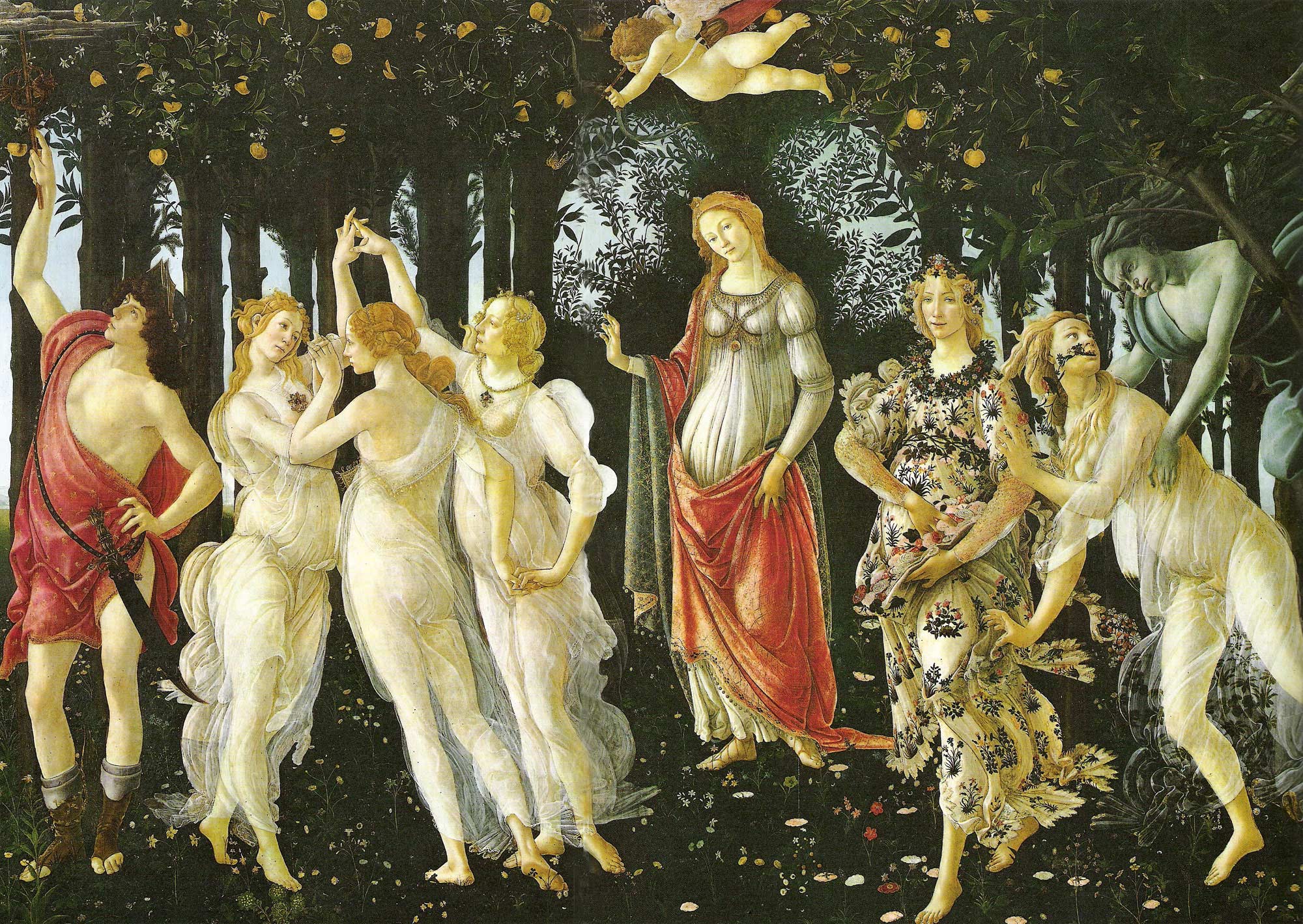 |
| La Primavera by Botticelli |
 |
| The Night Watch by Rembrandt |
Monday, July 16, 2012
Exploring Line
 | |
| (left) dominant hand drawing/(right) non-dominant drawing |
1. What was it like using your hand as subject matter for a drawing?
I thought it was cool to use my hand as the subject because I actually had to look and observe the lines and edges of something that I see and use everyday but never take the time to look at it. I enjoyed reacquainting myself to both hands during the process!
2. What media did you select - pencil or charcoal? Why?
I used charcoal because I have yet to use it and also because my pencils were dull and I didn't have access to a pencil sharpener. Yet I find myself to enjoy charcoal better because I like how it appears a little darker and edgier than just pencil.
3. How did it feel to create a drawing with your non-dominant hand?
It was uncomfortable at first but once I got going I kind of had fun with it. I knew it wasn't going to perfect or even aesthetically pleasing, but it was still an interesting exercise.
4. Compare and contrast your final drawings. Do you think they are successful studies?
I don't really know if it was successful just because I don't have much of an artistic eye for shading and line but I really enjoyed attempting it and just kind of scribbling away at my own leisure. I think I like my non-dominant drawing better too because I wasn't trying to be perfect with my lines and felt a lot looser with the sketch.
5. Would you consider using your non-dominant hand to create artwork in the future?
Yes I would definitely use my left hand again when making artwork, simply because it is fun and rids me of the pressure I put on myself when using my dominant hand.
Subscribe to:
Comments (Atom)